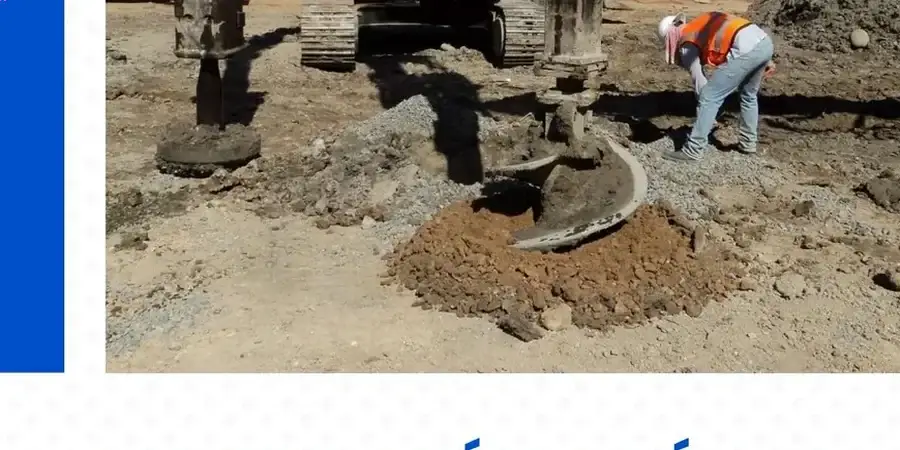
Ground improvement in Calgary is a critical geotechnical discipline that transforms weak or compressible soils into reliable foundation strata capable of supporting infrastructure, buildings, and industrial facilities. The category encompasses a suite of specialized techniques — from dynamic compaction design to deep soil mixing (DSM) design — each engineered to increase bearing capacity, reduce settlement, and mitigate liquefaction risks. In a city experiencing rapid urban expansion across variable terrain, these methods ensure that development can proceed safely on sites once considered marginal, protecting long-term structural integrity and investment value.
Calgary's geology presents unique challenges that make ground improvement essential. The region sits atop a complex mix of glacial till, lacustrine clays, and alluvial deposits from the Bow and Elbow Rivers, often underlain by Cretaceous bedrock. Near river valleys and in newer suburban areas, thick sequences of soft, compressible silts and clays are common, while loose sands susceptible to densification under seismic or vibratory loads pose additional concerns. Seasonal groundwater fluctuations and the presence of expansive soils in certain pockets further complicate site conditions, demanding tailored solutions such as unsaturated soil analysis to accurately predict soil behavior under varying moisture regimes.
Regulatory compliance in Calgary requires adherence to the Alberta Building Code, which references the National Building Code of Canada and CSA geotechnical standards, alongside local City of Calgary policies on foundation design and slope stability. Geotechnical investigations must follow Canadian Foundation Engineering Manual guidelines, and improvement designs are subject to rigorous peer review to satisfy safety factors for bearing capacity, settlement, and seismic performance. Environmental approvals under Alberta Environment and Parks may also apply when techniques like grouting design or jet grouting interact with groundwater, ensuring that injected materials do not adversely affect aquifers or adjacent properties.
The types of projects requiring ground improvement in Calgary are diverse. High-rise residential towers in the Beltline and East Village often rely on stone column design to reinforce soft alluvial soils, while transportation infrastructure like the Green Line LRT expansion demands advanced drainage and consolidation acceleration through prefabricated vertical drain (PVD) design. Industrial warehouses in the Foothills Industrial Area and energy sector facilities frequently use dynamic compaction or deep soil mixing to stabilize large footprints over variable ground. Even smaller-scale commercial developments on former agricultural land benefit from targeted geotechnical drainage design to control pore pressures and enhance soil strength. Each solution is selected based on a rigorous analysis of site stratigraphy, loading conditions, and long-term performance criteria, ensuring Calgary's built environment remains resilient against geotechnical hazards.
Ground improvement refers to a range of geotechnical techniques that modify soil properties to increase strength, reduce compressibility, or control groundwater flow. In Calgary, it becomes necessary when site investigations reveal weak lacustrine clays, loose alluvial sands, or fill materials that cannot safely support proposed loads. Indicators include excessive predicted settlement, low bearing capacity, or liquefaction potential, especially in river valley corridors and newer suburban developments over former glacial lake beds.
Selecting the appropriate method depends on soil conditions, loading requirements, sensitivity to vibration or noise, and project timeline. A detailed geotechnical investigation — including boreholes, cone penetration tests, and laboratory analysis — establishes the soil profile and engineering parameters. From there, options like dynamic compaction for granular soils, stone columns for cohesive soils, or deep soil mixing for contaminated sites are evaluated against performance criteria, with local experience guiding the final recommendation.
Settlement tolerances vary by structure type and are defined in the National Building Code of Canada and project-specific performance specifications. For most buildings in Calgary, total post-construction settlement is limited to 25 mm or less, with differential settlement kept below 1:500 angular distortion. Ground improvement designs target these values by pre-consolidating soils through surcharging with PVDs, densifying granular layers, or reinforcing with rigid inclusions, verified through post-treatment testing.
Duration ranges from days for dynamic compaction to several months for surcharging with prefabricated vertical drains, depending on soil permeability and treatment depth. Performance is verified through field testing such as cone penetration tests, pressuremeter tests, and plate load tests before and after treatment, plus settlement monitoring during and after construction. Calgary projects often require a minimum number of verification points per area treated, as stipulated by the geotechnical engineer of record.